







FAQ
Radio-frequency identification (RFID) uses electromagnetic fields to automatically identify and track tags attached to objects. An RFID system consists of a tiny radio transponder, a radio receiver and transmitter. When triggered by an electromagnetic interrogation pulse from a nearby RFID reader device, the tag transmits digital data, usually an identifying inventory number, back to the reader. This number can be used to track inventory goods.
Passive tags are powered by energy from the RFID reader's interrogating radio waves. Active tags are powered by a battery and thus can be read at a greater range from the RFID reader, up to hundreds of meters.
Unlike a barcode, the tag does not need to be within the line of sight of the reader, so it may be embedded in the tracked object. RFID is one method of automatic identification and data capture (AIDC).
RFID tags are used in many industries. For example, an RFID tag attached to an automobile during production can be used to track its progress through the assembly line, RFID-tagged pharmaceuticals can be tracked through warehouses, and implanting RFID microchips in livestock and pets enables positive identification of animals. Tags can also be used in shops to expedite checkout, and to prevent theft by customers and employees.
Since RFID tags can be attached to physical money, clothing, and possessions, or implanted in animals and people, the possibility of reading personally-linked information without consent has raised serious privacy concerns. These concerns resulted in standard specifications development addressing privacy and security issues.
Near-field communication (NFC) describes a technology which can be used for contactless exchange of data over short distances. Two NFC-capable devices are connected via a point-to-point contact over a distance of 0 to 2 cm. This connection can be used to exchange data (such as process data and maintenance and service information) between the devices. This interface can be used for parameterization of the component as well.
NFC-enabled portable devices can be provided with application software, for example to read electronic tags or make payments when connected to an NFC-compliant system. These are standardized to NFC protocols, replacing proprietary technologies used by earlier systems.
Like other "proximity card" technologies, NFC is based on inductive coupling between two so-called antennas present on NFC-enabled devices—for example a smartphone and a printer—communicating in one or both directions, using a frequency of 13.56 MHz in the globally available unlicensed radio frequency ISM band using the ISO/IEC 18000-3 air interface standard at data rates ranging from 106 to 424 kbit/s.
Every active NFC device can work in one or more of three modes:
NFC card emulation
Enables NFC-enabled devices such as smartphones to act like smart cards, allowing users to perform transactions such as payment or ticketing. See Host card emulation.
NFC reader/writer
Enables NFC-enabled devices to read information stored on inexpensive NFC tags embedded in labels or smart posters.
NFC peer-to-peer
Enables two NFC-enabled devices to communicate with each other to exchange information in an ad hoc fashion.
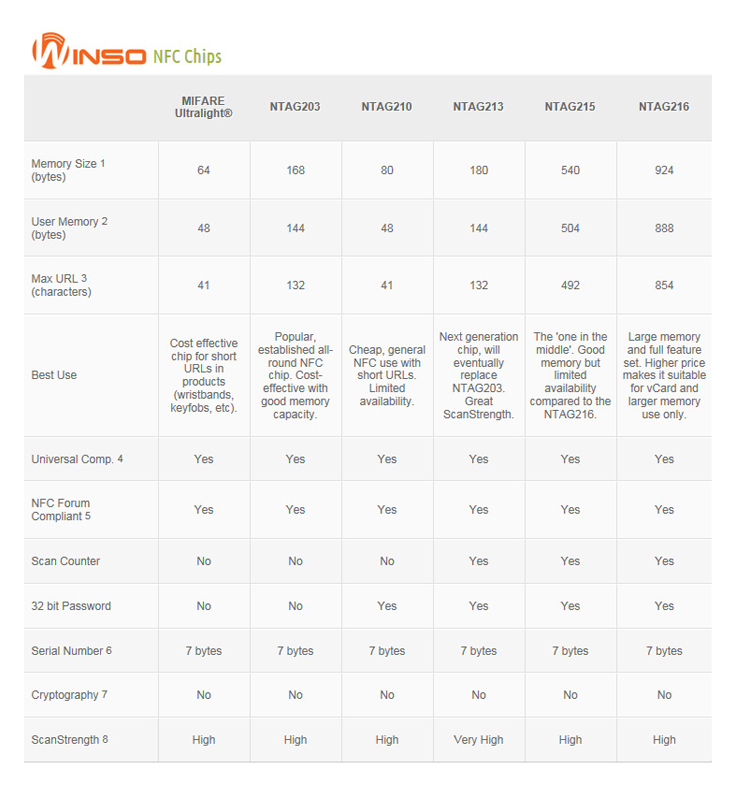
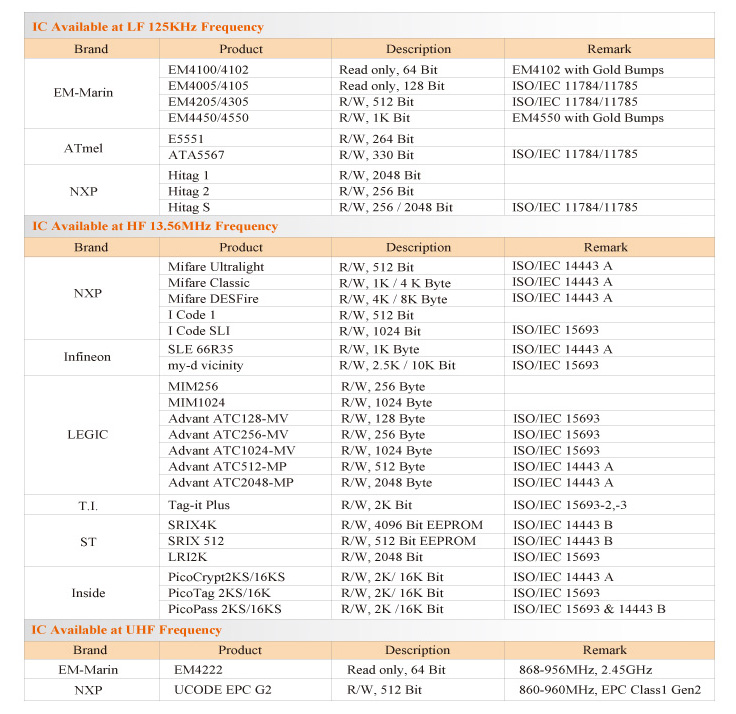
-
Pages : 1 / 1 Data total : 3